🚆 TRAIN CLASSES IN THAILAND
Trains in Thailand offer a range of travel classes, from basic local seating to private sleeper cabins. Choosing the right class can make a big difference to your journey — not just in comfort, but in the overall experience. Some options are simple but immersive, while others are more comfortable but less social.
🧭 Quick Overview
| Class | Best for | Comfort | Price |
|---|
| 3rd Class (fan) | Short trips, local experience | Basic | Cheapest |
| 2nd Class (fan or air-con) | Most journeys | Good | Moderate |
| 2nd Class Sleeper | Overnight travel | Comfortable | Moderate |
| 1st Class Sleeper | Privacy, overnight comfort | Best | Higher |
🪟 3rd Class (Fan) — The Local Experience
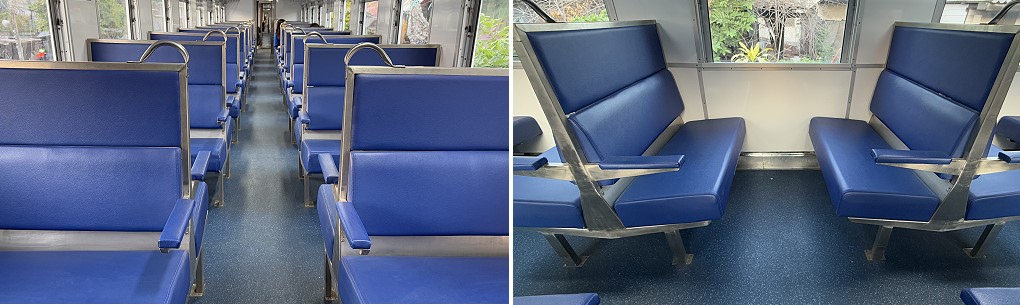
3rd Class is the most basic way to travel — and also the most authentic. Seats are bench-style with open windows and ceiling fans. Vendors often pass food and drinks through the windows at station stops.
- Open windows and ceiling fans
- Bench-style seating, unreserved
- Food vendors at stations and through windows
- Very cheap fares — among the lowest in Southeast Asia
⭐ What it's like
This is the most immersive way to travel by train in Thailand. You feel the breeze, hear the sounds of the railway, and see the countryside without any barrier. People are more likely to talk, share food, and interact — it's how most local passengers travel.
⚠️ Things to know
- Can be hot and noisy, especially in summer
- No reserved seating on Ordinary and Local trains — arrive early for a window seat
- Not ideal for long journeys or overnight travel
👉 Best for: short trips (1–3 hours), local routes, unique experiences
❄️ 2nd Class (Air-Con or Fan) — The Practical Choice
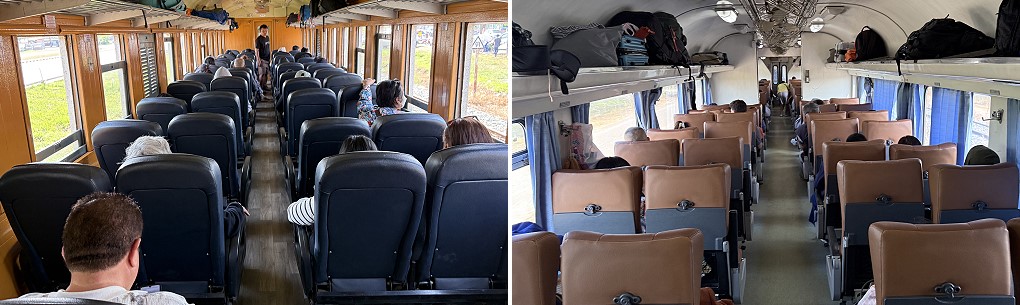
2nd Class is the most popular option and offers a good balance between comfort and price. Available in both fan (left) and air-conditioned versions (right), with reserved seating on most services.
- Comfortable reclining seats
- Air-conditioned or fan options
- Reserved seating on most trains
⭐ What it's like
Air-conditioned 2nd Class is comfortable and reliable, especially for longer journeys. But it's a very different experience from 3rd Class — windows are sealed and often tinted, the carriage is quieter, and passengers tend to keep to themselves. It feels more like a standard transport experience rather than a social one.
👉 Best for: medium to long daytime journeys
🛏️ 2nd Class Sleeper — Overnight Travel
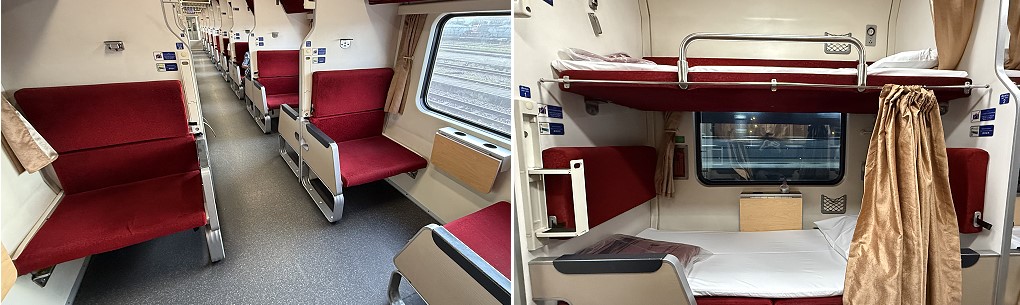
On overnight trains, 2nd Class seats convert into beds in the evening. This is the most popular choice for long-distance overnight journeys such as Bangkok to Chiang Mai or Bangkok to Hat Yai.
- Upper and lower berths with curtains for privacy
- Bedding provided and made up by the attendant
- Air-conditioned carriages on most sleeper trains
💡 Choose a lower berth if you can
- More space and easier to get in and out
- Further from air vents and overhead lights
- Has a window beside the bed
⚠️ Things to know
- Air-conditioning can be very cold — bring a light jacket or layer
- Book in advance, especially for popular routes and peak season
👉 Best for: overnight journeys, long-distance travel, saving on accommodation
🚪 1st Class Sleeper Cabins — The Premium Option
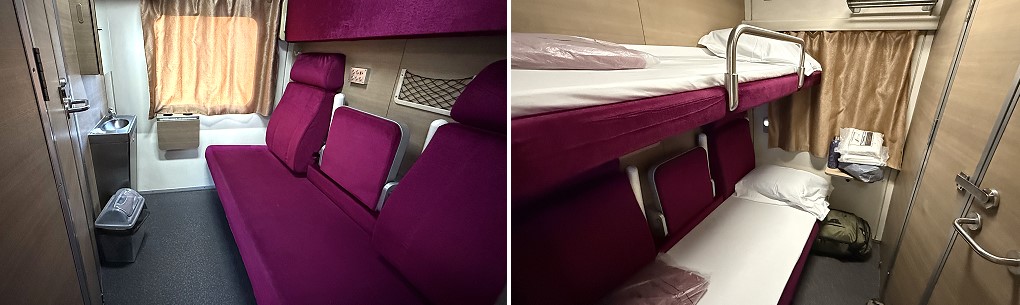
1st Class is available on selected long-distance trains and offers a fully private experience. Cabins typically have two berths, a lockable door, and air-conditioning.
- Private cabins (usually 2 berths per cabin)
- Air-conditioning and lockable doors
- Unlike in 2nd Class, you can actually turn off the lights
- More space and privacy than 2nd Class
- On newer CNR trains: modern facilities, power outlets, and vacuum toilets
⭐ What it's like
This is the most comfortable and private way to travel by train in Thailand. Ideal if you want privacy, are travelling as a couple, or simply want a quieter overnight experience. On the newer CNR sleeper trains, the facilities are genuinely impressive.
⚠️ Things to know
- Limited availability — sells out quickly, especially on popular routes
- More expensive than 2nd Class, but still affordable by international standards
- Not available on all trains
👉 Best for: overnight journeys, couples, privacy, comfort
⚖️ Choosing the Right Class
| Your journey | Recommended class |
|---|
| Short trip under 3 hours | 3rd Class — for the experience |
| Daytime journey 3–6 hours | 2nd Class air-con — for comfort |
| Long distance overnight | 2nd Class sleeper — best value |
| Overnight, want privacy | 1st Class sleeper cabin |
⭐ My recommendation: Try 3rd Class once for a short journey to get the real local experience — then use 2nd Class for anything longer. This way you get both the authenticity and the comfort when you need it.
⚠️ General things to be aware of
- Air-conditioned carriages can be very cold — always bring a light jacket
- Older rolling stock varies in quality — check which train you're on
- Not all trains offer all classes — check the timetable before booking
❓ Frequently Asked Questions
Which class is best in Thailand?
2nd Class is the best balance of comfort and price for most journeys. For overnight travel, the 2nd Class sleeper is the most popular choice.
Is 3rd Class worth trying?
Yes — for short trips, it's one of the most memorable travel experiences in Thailand. Open windows, local passengers, food vendors, and views unfiltered by tinted glass.
Are sleeper trains comfortable?
Yes, especially on newer trains. 2nd Class sleepers are well-maintained with bedding provided, and 1st Class cabins on modern CNR trains are genuinely impressive.
Is 1st Class worth it?
If you want privacy and comfort on an overnight journey — particularly as a couple — then yes. It costs more than 2nd Class but remains affordable compared to train travel in most other countries.
🚆
FINAL THOUGHTS: Train travel in Thailand isn't just about getting from one place to another — it's about choosing the kind of journey you want. From open windows and local chatter in 3rd Class to a private sleeper cabin in 1st Class, there's a way to travel by train here for every kind of traveller.
Use Thai Tracks to find trains and plan your journey.
ℹ️
This website is not affiliated with the State Railway of Thailand. All times and fares are subject to change.